Solutions · By chemistry
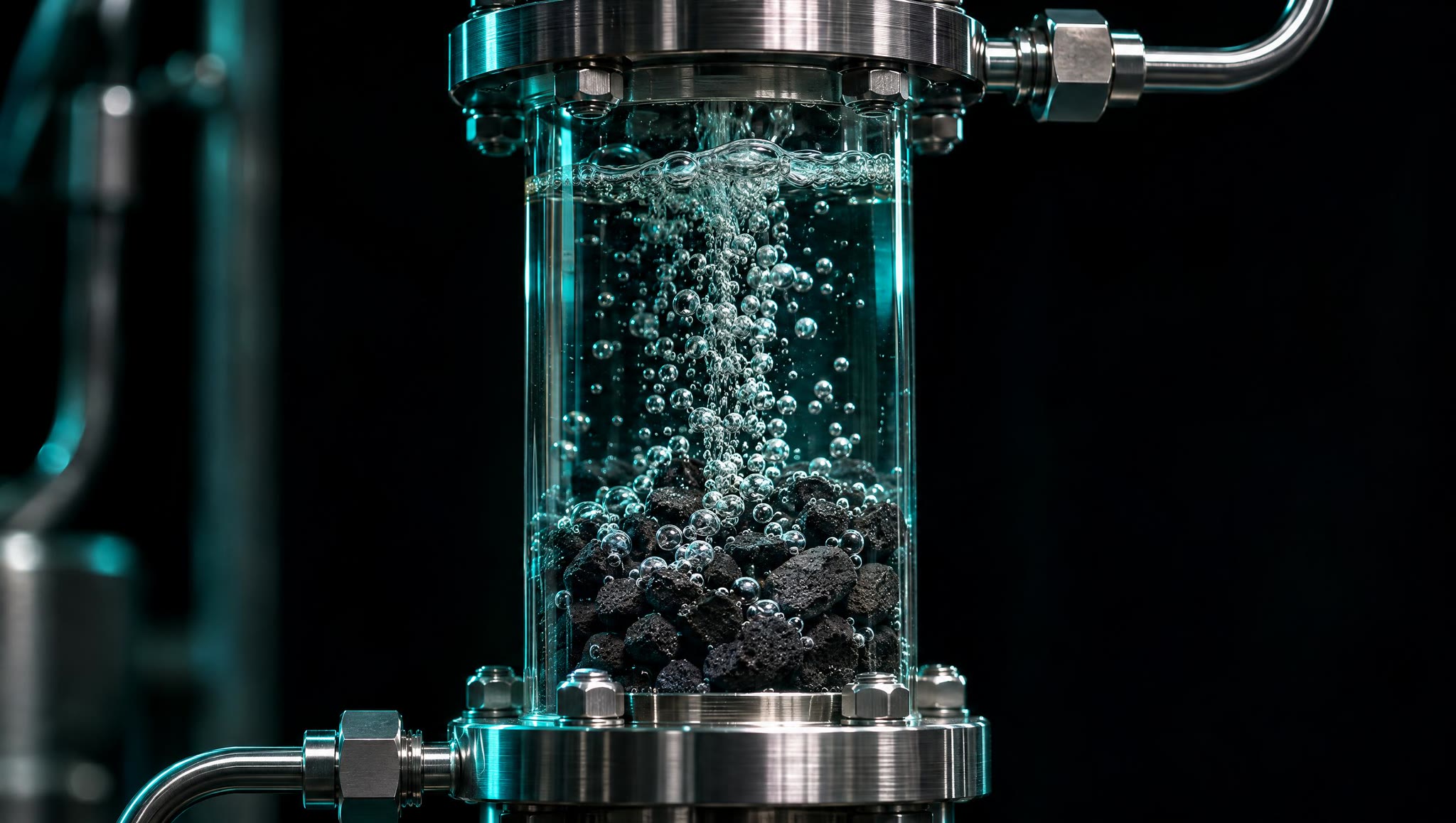
Hydrogenation, ozonolysis and other gas–liquid steps depend on how well the gas meets the liquid, and often a catalyst. In batch, that contact gets harder with every litre.
Gas–liquid reactions are often limited by mass transfer and not by kinetics. A continuous system gives a defined gas–liquid contact pattern at pressure, with a small gas inventory at any moment.
Read the detailHide the detail
A flow hydrogenator is assessed as its own safety case, separate from a batch autoclave. Catalyst handling, pressure rating, gas supply, venting and materials of construction are defined per project. Ozonolysis and other energetic gas chemistry need a formal process-safety assessment.
The pain
Where gas–liquid steps struggle.
- 01Mass transfer that falls off on scale
- 02A large pressurised gas headspace
- 03Catalyst filtration and handling
- 04Long reaction times at modest pressure
- 05Selectivity between partial and full reduction
The approach
Find the step that sets the rate.
- 01
Name the limiting step
Kinetics, gas solubility, mass transfer or catalyst: the review decides which one actually sets the rate.
- 02
Choose the contactor
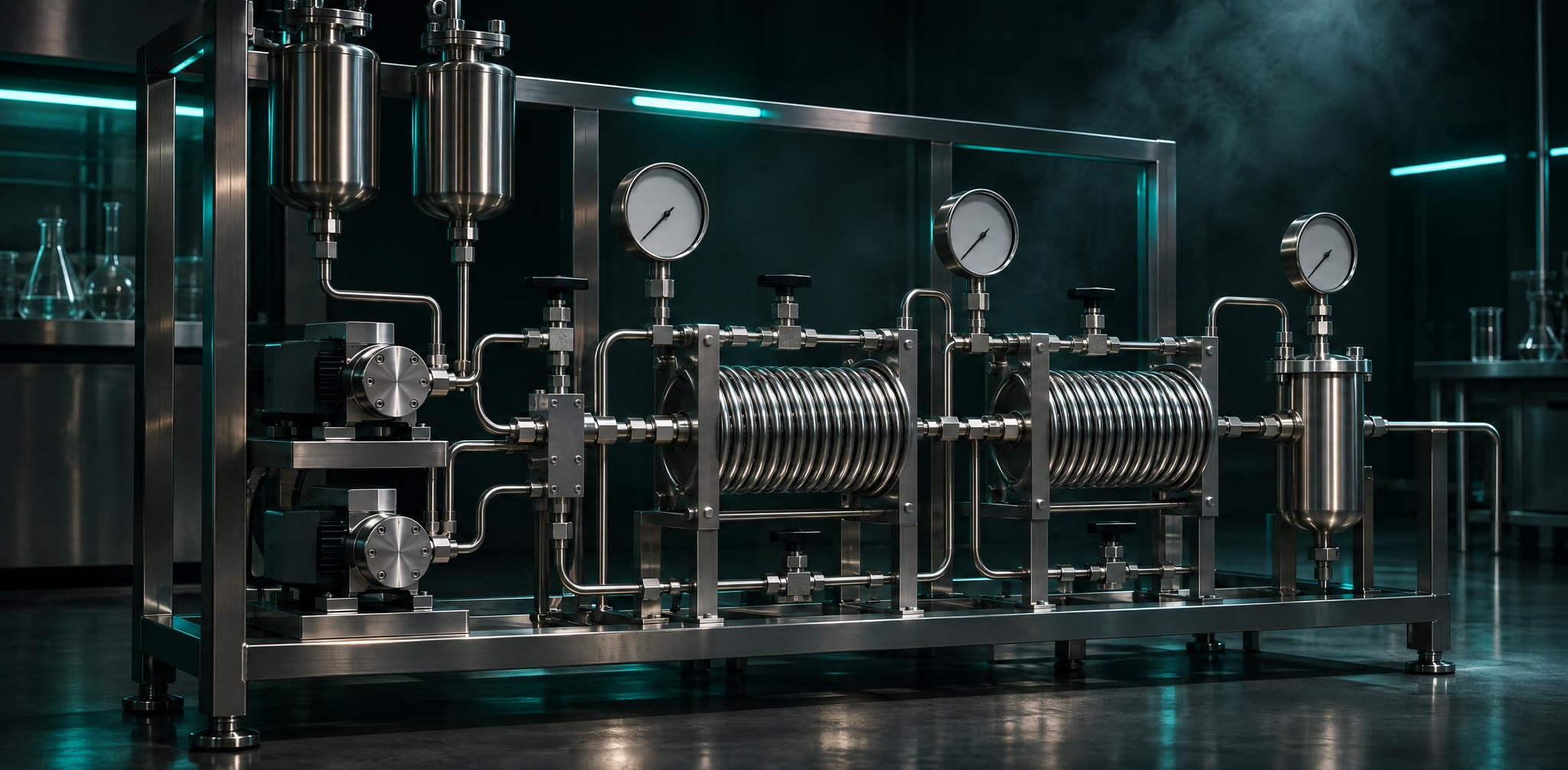
A tubular gas–liquid reactor or a fixed bed of catalyst is matched to the chemistry and the solids strategy.
- 03
Screen the conditions
Laboratory runs map conversion and selectivity against pressure, temperature and residence time.
- 04
Check the long run
Catalyst life, pressure drop and stability are examined before any scale-up recommendation.


Next step
Bring us the problem.
Share the chemistry, the current process and where it hurts. We will suggest a practical next step.