Technology
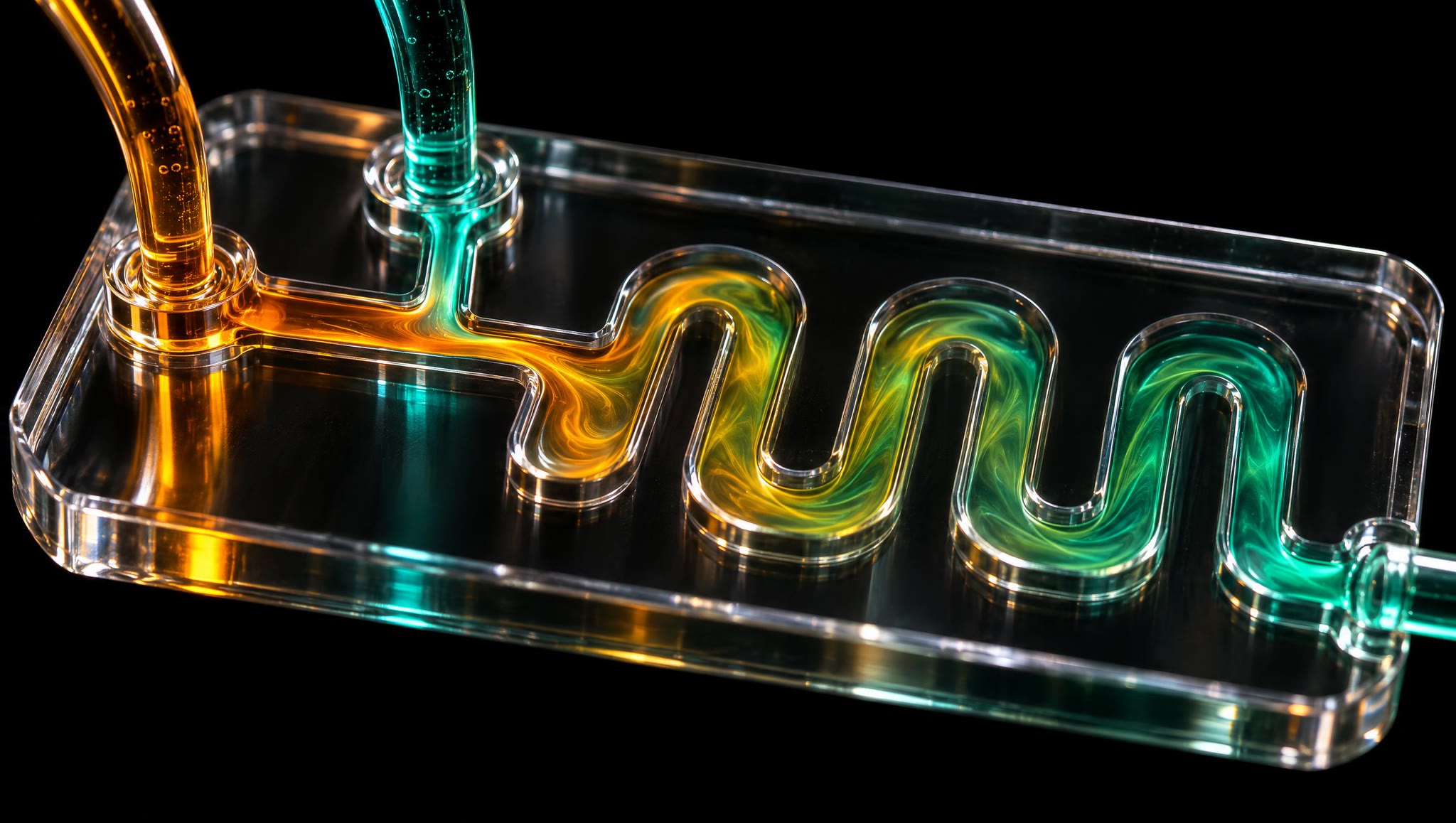
Batch-to-flow conversion is not an equipment swap. It starts with the chemistry, hazards, kinetics, mixing, heat release, solids, work-up and the manufacturing objective.
Caxyo helps clients decide which steps should move to flow, which should remain batch, and where a hybrid process creates the better balance of safety, quality, productivity and cost.
Read the detailHide the detail
The useful result is sometimes a recommendation to leave the process in batch. That is a completed evaluation, not a failed one.
- 01
Current batch process
Conditions, additions, heat, mixing, impurities and deviations are known well enough to argue about.
- 02
Name the constraint
Heat, selectivity, light, gas transfer, hold time, pressure, mixing or exposure. Name one primary limit.
- 03
Is there a clear flow advantage?
If the batch process is already robust and economical, it stays in batch.
If no: remain in batch. Document why flow does not earn the change.
If yes: continue to laboratory feasibility. Do not specify plant equipment yet.
- 04
Laboratory feasibility
Residence time, flow, concentration, temperature, pressure, mixing and quench.
- 05
Operating window
Yield, selectivity, impurities, safety and downstream compatibility.
- 06
Architecture
Batch, semi-continuous, continuous flow, or hybrid.
- 07
Transfer package
Equipment, parameters, sampling, alarms, critical process parameters and scale-up logic.
A decision aid, not a substitute for a hazard study or a quality assessment.
Conversion method
- 01
Understand the current batch process
Review reaction conditions, concentrations, addition order, heat profile, mixing, hold times, work-up, isolation, impurities and process deviations.
- 02
Identify the scale-up constraint
The constraint may be heat removal, selectivity, gas transfer, unstable-intermediate hold time, photochemical penetration, mixing, pressure control or operator exposure.
- 03
Rank candidate steps
Prioritize reactions where flow can provide a clear technical advantage. A robust, economical batch process is not forced into conversion.
- 04
Establish flow feasibility
Test residence time, flow rate, concentration, temperature, pressure, mixing and quench behavior at laboratory scale.
- 05
Develop the operating window
Study the parameters that control yield, selectivity, impurity profile, safety and downstream compatibility.
- 06
Select the manufacturing architecture
Choose batch, continuous flow, semi-continuous or hybrid processing.
- 07
Prepare for scale-up and transfer
Document equipment, process parameters, sampling, controls, alarms, critical process parameters and scale-up logic.
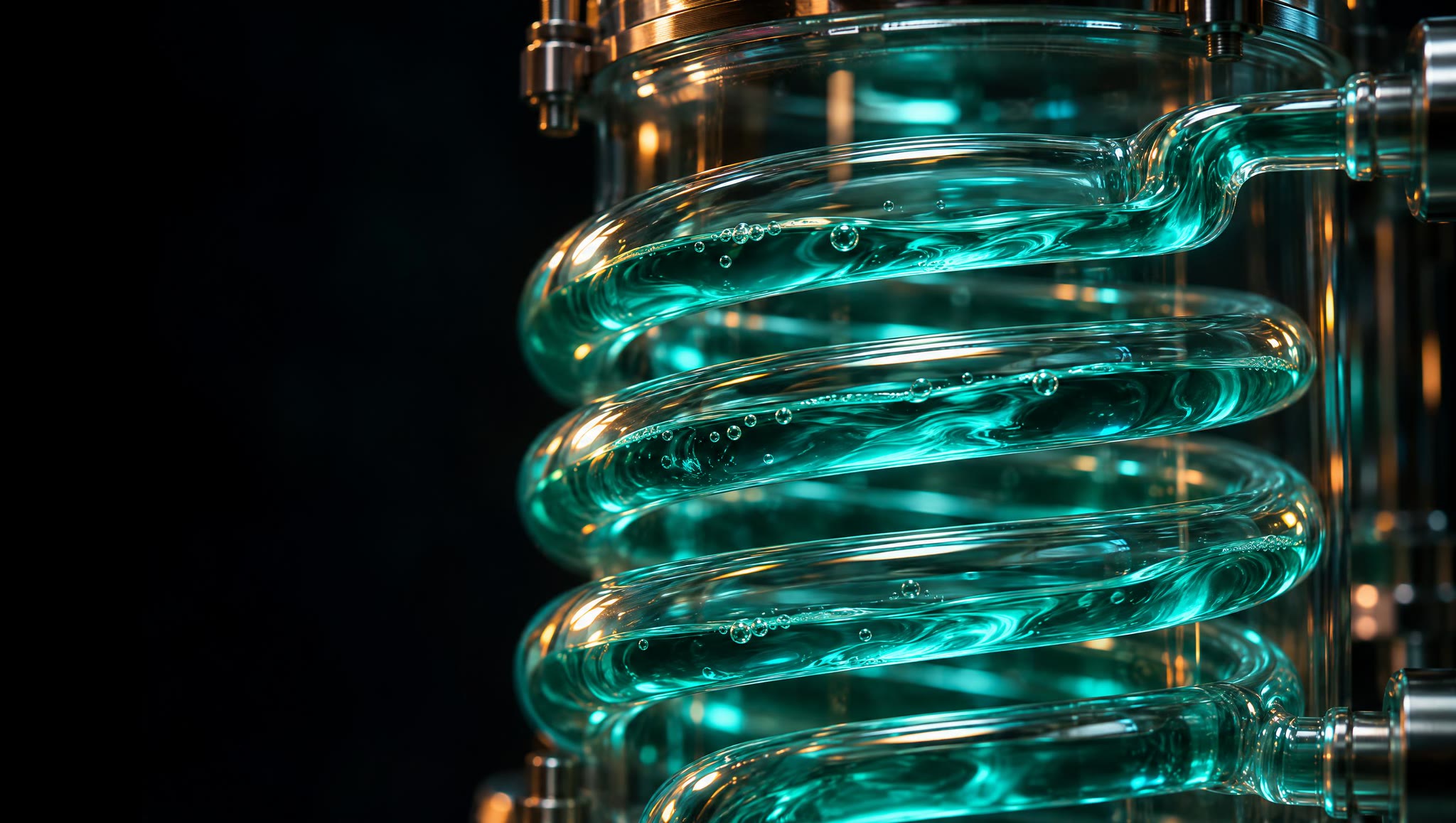
Better control for exothermic reactions.
Continuous flow can be valuable for reactions that release heat rapidly because the reactor can have a lower working inventory and a higher surface-area-to-volume ratio than a conventional batch vessel.
Read the detailHide the detail
The design must still account for reaction calorimetry, mixing, pressure, materials compatibility, quench, blockage risk, relief strategy and emergency response. Potential examples include nitration, oxidation, azidation, hydrogenation and other energetic transformations.

Next step
Have a process that is difficult to scale?
Share the chemistry, the current process, the desired scale and the main technical constraint. The team will review the opportunity and suggest a practical next step.