Phase 02
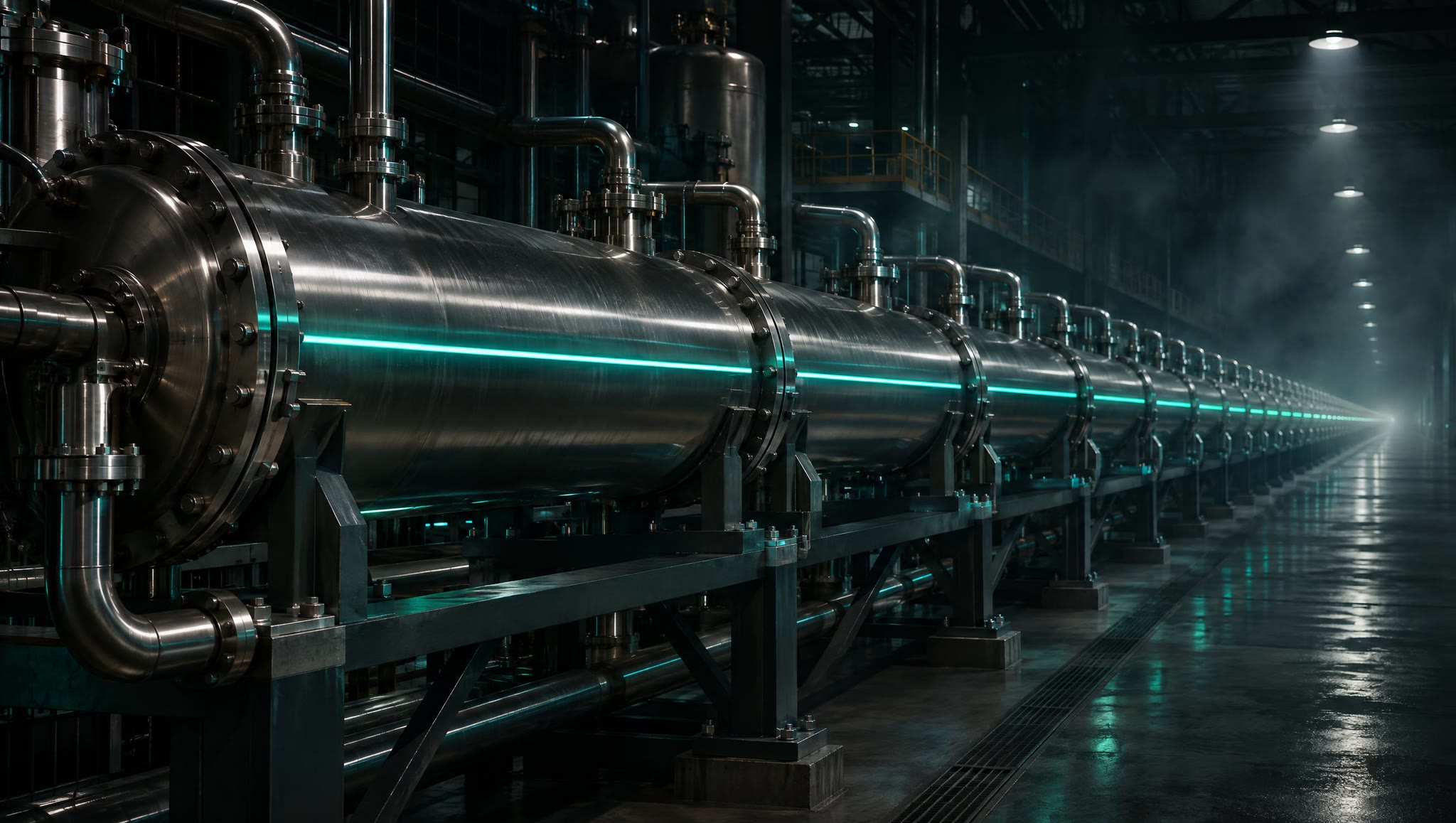
Flow scale-up is the controlled translation of chemistry and process conditions across equipment and throughput while preserving mixing, heat transfer, residence time, pressure and product quality.
Once feasibility is positive, the work turns to intensification and a change in throughput. Space–time yield, quality and the impurity profile are compared with an agreed baseline. Solvent, reagent, energy and catalyst use are examined where the chemistry allows a real reduction. Isolations and filtrations that do not earn their place are challenged.
Read the detailHide the detail
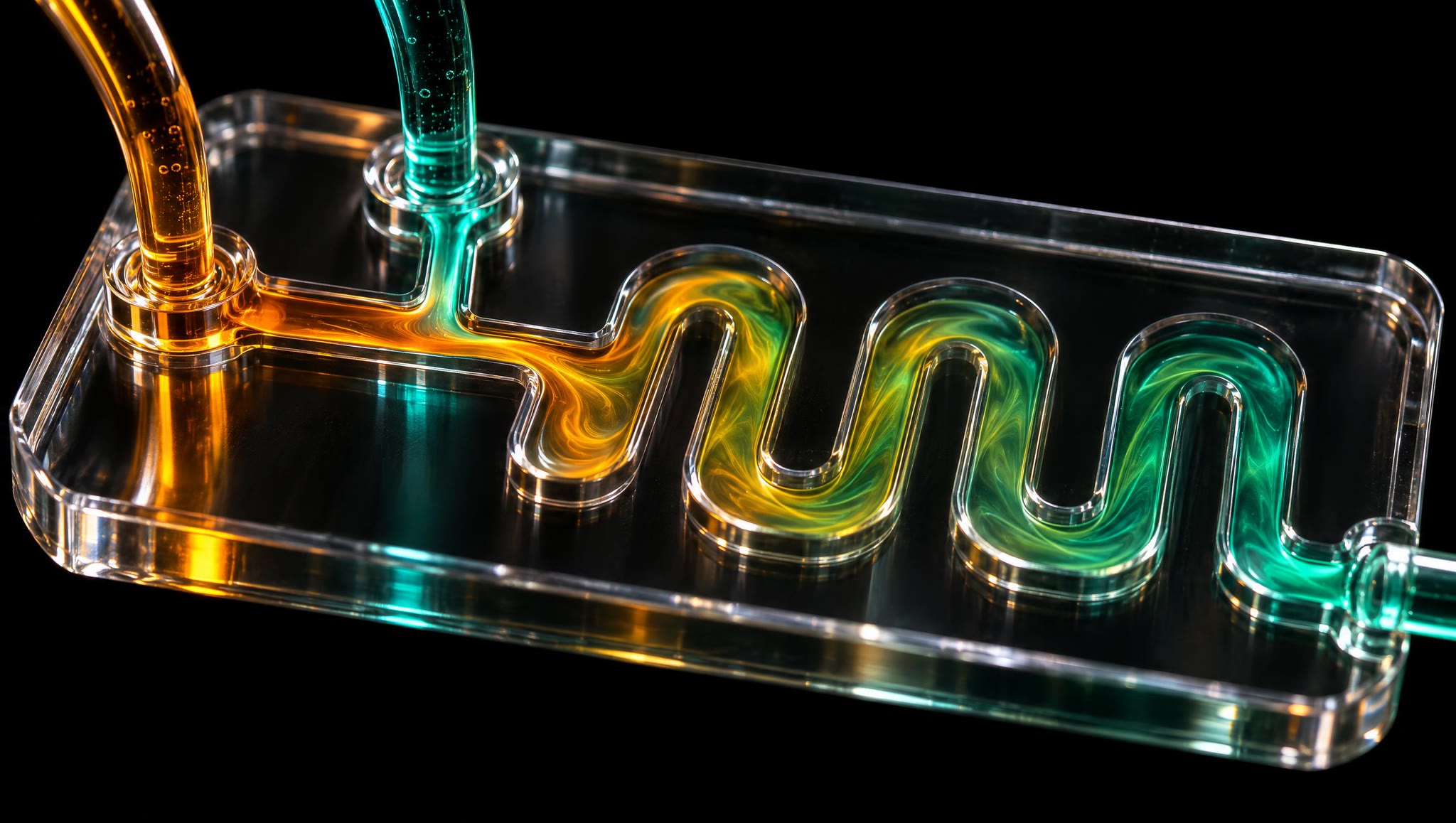
The operating window is then tuned so the process can meet the specification and the quality expectations of the next manufacturing stage. “Make the reactor bigger” is not the method.
What is held constant
The mixing regime, the heat-removal path, the residence-time distribution and the pressure boundary that the quality depends on.
What is allowed to change
Channel count, length, diameter or campaign time, and only after the effect on quality is understood.
What is measured
Yield, selectivity, impurities, solvent intensity and any safety metric the hazard study names.
What is not claimed
A ton-scale rating, a fixed kilo capacity, or a regulatory filing. Those depend on qualification and the contracted scope.
What optimization takes as given
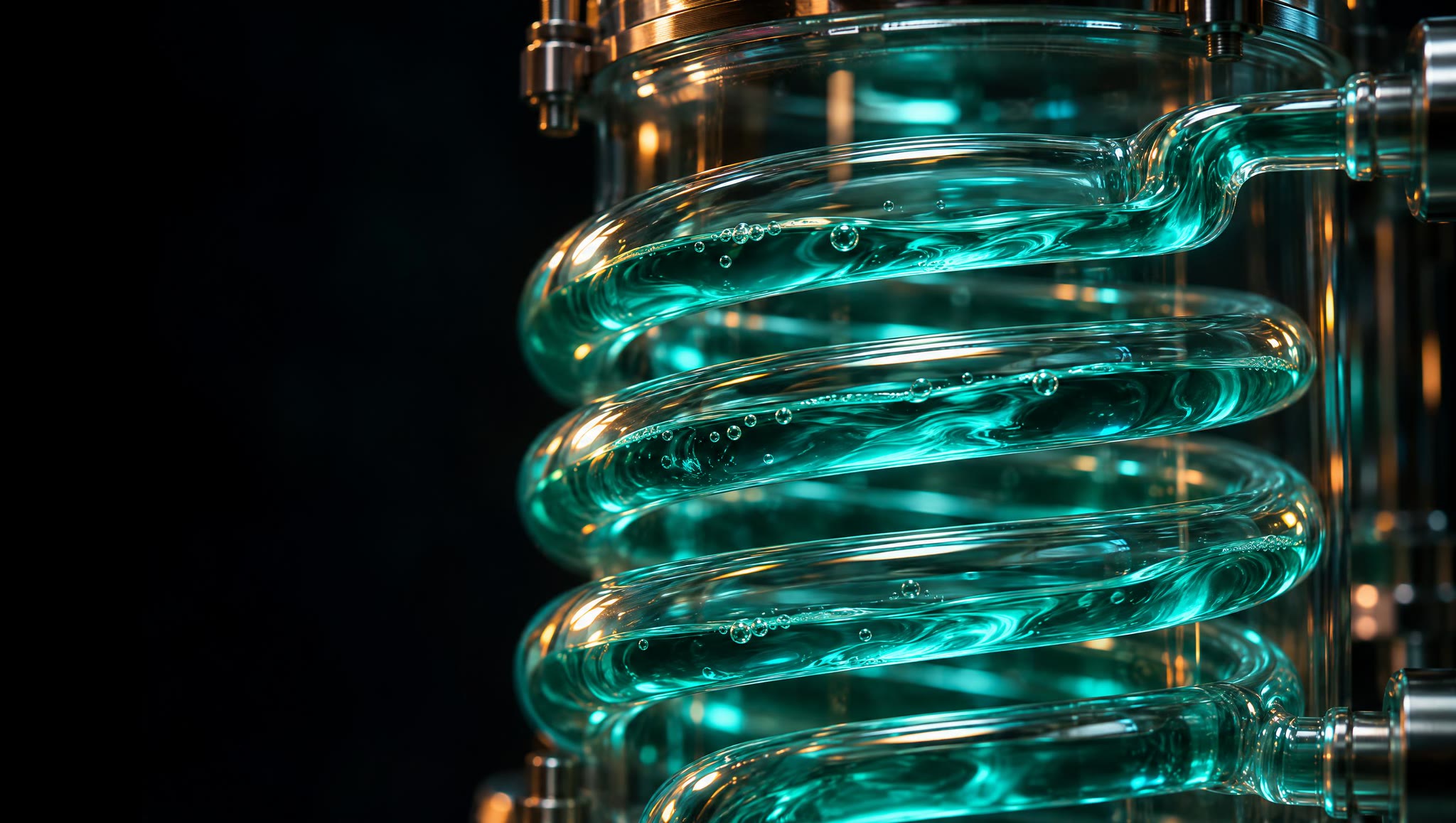
This stage starts from a review that already supported a change. The deliverable is an operating window that still makes the same product as throughput moves. A supply contract is not implied by a successful scale-up study.

Next step
Have a process that is difficult to scale?
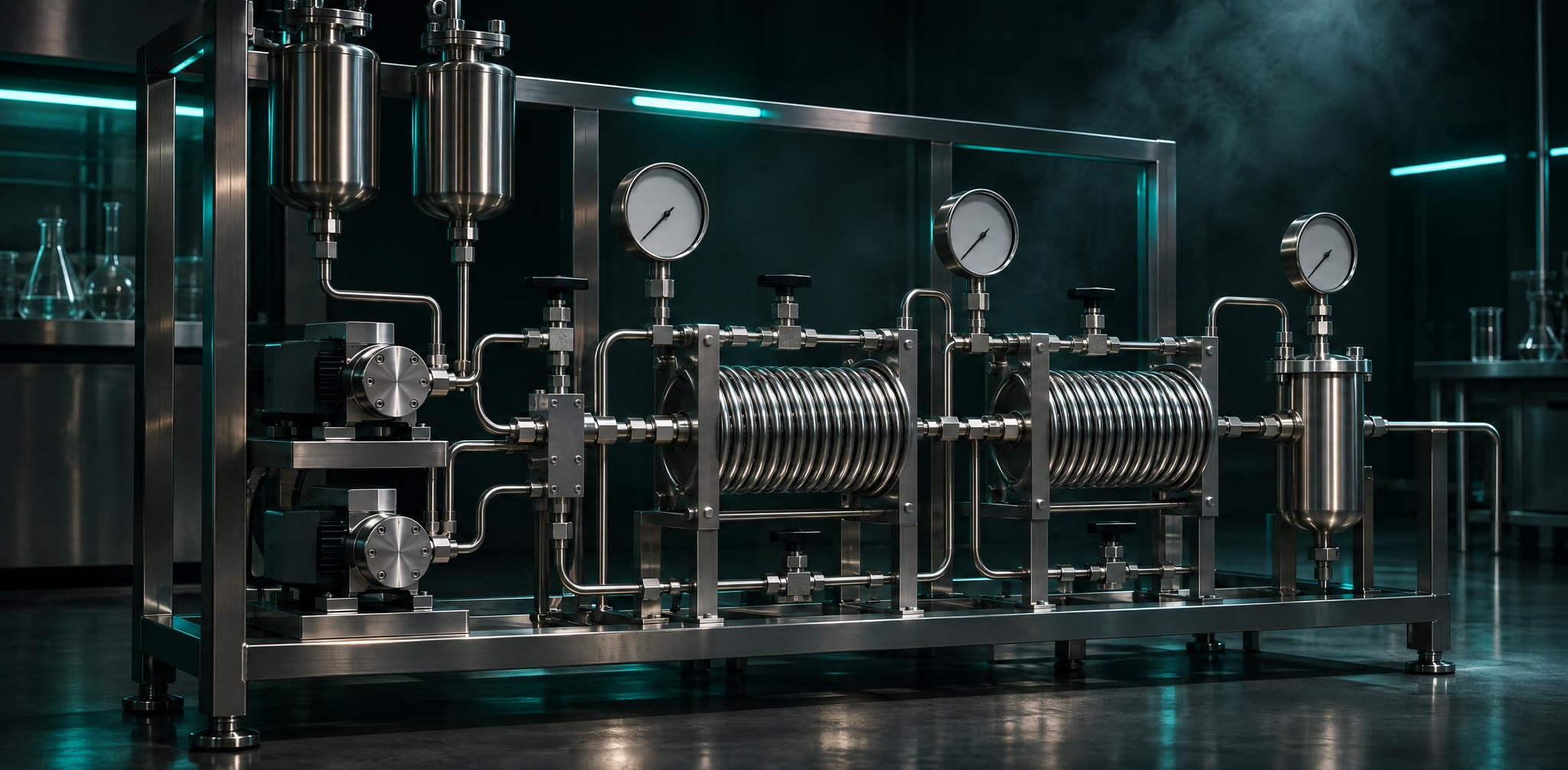
Share the chemistry, the current process, the desired scale and the main technical constraint. The team will review the opportunity and suggest a practical next step.