Solutions · By chemistry
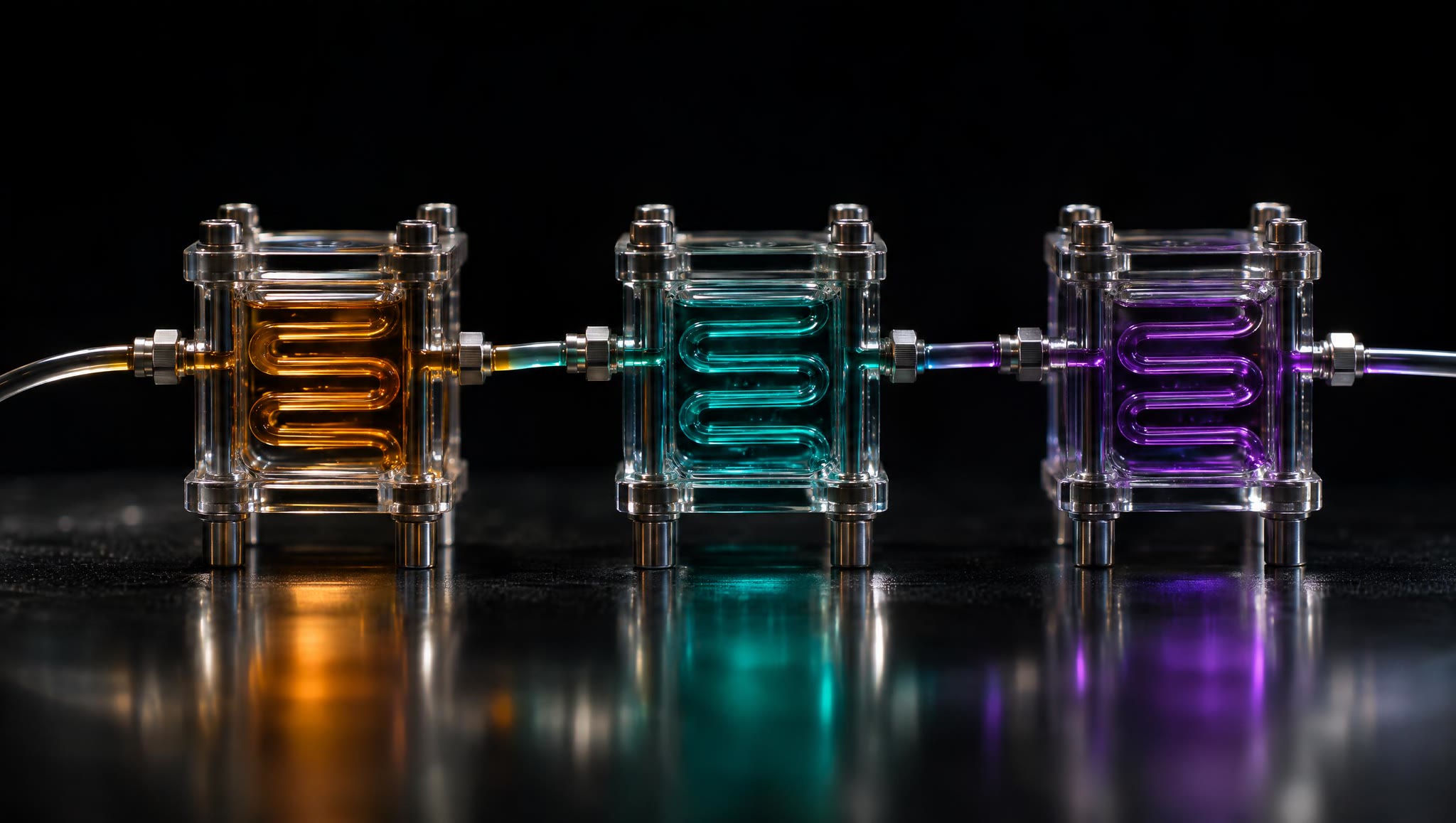
Every isolation costs time, solvent and yield. Where the chemistry allows, consecutive steps can run as one continuous sequence.
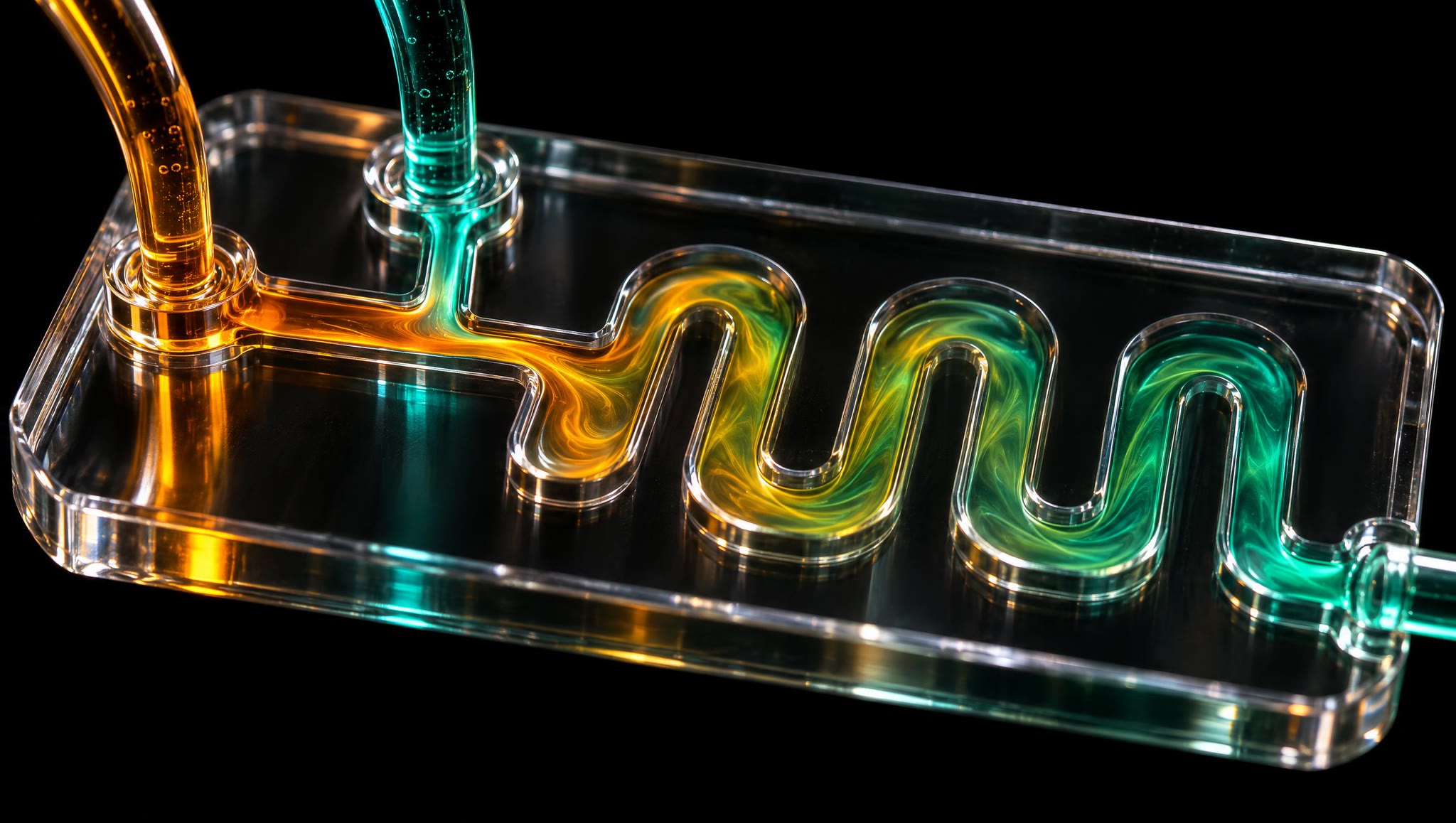
Telescoping connects reaction steps so the stream from one feeds the next. It can shorten a route and avoid handling an intermediate that is hazardous or unstable.
Read the detailHide the detail
It only works when the steps are compatible. Solvents, by-products and flow rates have to match, or an inline quench, extraction or solvent change has to sit between them. Each link is proven on its own before the sequence is joined, and isolations that protect quality stay in.
The pain
What isolations cost.
- 01Isolation and drying between every step
- 02Handling hazardous or unstable intermediates
- 03Solvent swaps and large solvent volumes
- 04Long total cycle time across a route
- 05Impurities carried from step to step
The approach
Join only what is proven.
- 01
Rank the links
Which adjacent steps are compatible, and which isolation genuinely protects quality.
- 02
Prove each step in flow
Every reaction gets its own operating window first.
- 03
Design the interface
A quench, extraction, dilution or solvent change is engineered between steps where needed.
- 04
Run the sequence
The joined train is run long enough to see how disturbances and impurities travel.

Next step
Bring us the problem.
Share the chemistry, the current process and where it hurts. We will suggest a practical next step.